💫 The Stumble and the Step: When Today Isn’t Perfect

Hey. If you stumbled today, relapsed, veered off your eating plan, self-injured, or whatever way you veered off course — it’s okay.
It sucks — it really does — but your recovery’s NOT doomed.
In the world of healing, we are often led to believe that recovery is a spotless, linear march toward perfection. This belief is a setup for catastrophic failure. When the inevitable stumble happens, all-or-nothing thinking takes over, screaming: “You ruined everything. Go back to the old way. What’s the point?”
The truth is, a stumble is an event, not a destination.
The Myth of Compensation
After a slip-up, the trauma-conditioned response is usually to panic and attempt radical, punishing course correction:
Compensating for a relapse by isolating completely.
Compensating for a self-injurious act with extreme shame and self-hatred.
Compensating for a veer off an eating plan with severe restriction.
This reaction is not recovery; it is a rapid spiral back into the patterns of self-punishment and extreme control that fuel the original issue. The goal is not to compensate for anything; the goal is not self-punishment.
🛡️ The Name of the Game: Harm Reduction
The name of the game right now is harm reduction, getting 1% safer.
Harm reduction is a compassionate, non-judgmental approach that recognizes where you are right now and asks: “What is the single smallest, safest step I can take immediately?”
This is not about erasing the stumble; it’s about putting a buffer between the stumble and the resulting panic:
When the impulse is to binge after veering off a plan: Acknowledge the slip, drink a glass of water, and eat the next meal as planned without restriction. No compensation.
When the impulse is to isolate after a relapse: Text a trusted support person or sponsor a simple message: “Stumbled.” Reaching out is 1% safer than isolating.
When the impulse is to hide after self-injury: Clean the wound, apply antiseptic (even if you don’t feel like it), and put the tools away. Take a breath.
In each case, the focus shifts from punishing the past mistake to protecting your future self.
The Simple, Immediate Steps
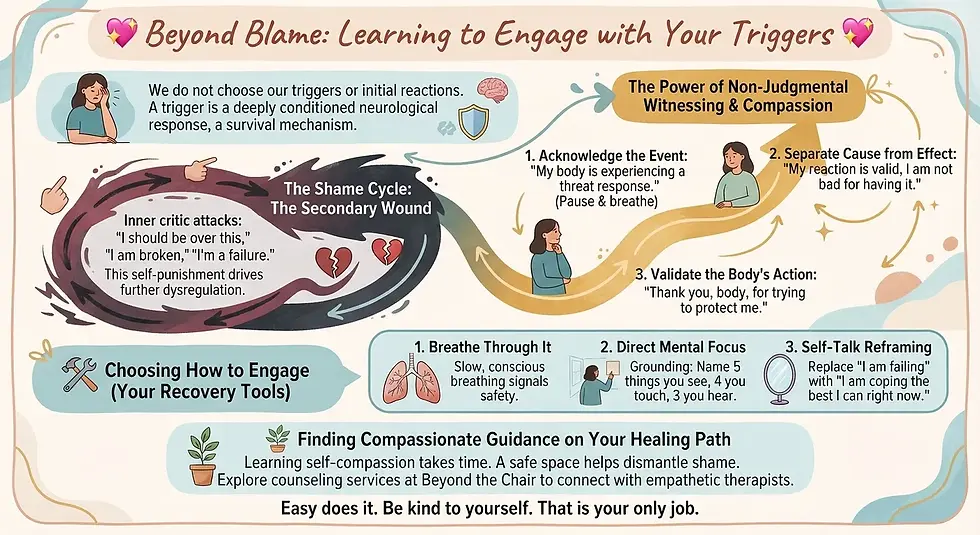
If you are reading this and your nervous system is cycling in panic and shame, take a moment. You are safe right now.
Breathe: Take three slow, deep breaths. This is the simplest harm reduction tool available. It immediately signals safety to your brain.
Acknowledge: Say out loud or internally, “I stumbled. That sucks. It’s not a disaster.”
Focus: What is the single, non-punitive thing you can do right now to be 1% safer? This could be drinking water, walking into another room, or sitting down to do a five-minute grounding exercise.
🌿 Finding Safe Support When You Stumble
Recovery isn’t meant to be walked perfectly or alone. When stumbles happen, having a compassionate, trauma-informed counselor can provide the safe, non-judgmental space you need to pick yourself back up without shame.
If you are looking for support to navigate recovery, manage slip-ups with grace, and build personalized harm-reduction strategies, consider exploring professional counseling services. Connecting with therapists who are dedicated to standing by you can make all the difference.
You are not doomed. Your recovery is defined by your willingness to get back up, and the act of choosing a 1% safer option right now is the most profound sign of commitment there is.


Comments